The Community Value of Restoring a Victorian Home
More Than a House: The Impact of Restoration on a Community
Restoring a historic home is often seen as a personal project—something done for the enjoyment, satisfaction, and vision of the owner. But in many cases, the impact reaches far beyond the property itself. A thoughtfully restored home can influence how a street feels, how a neighborhood is perceived, and how people experience the place where they live or visit.
A Home That People Notice
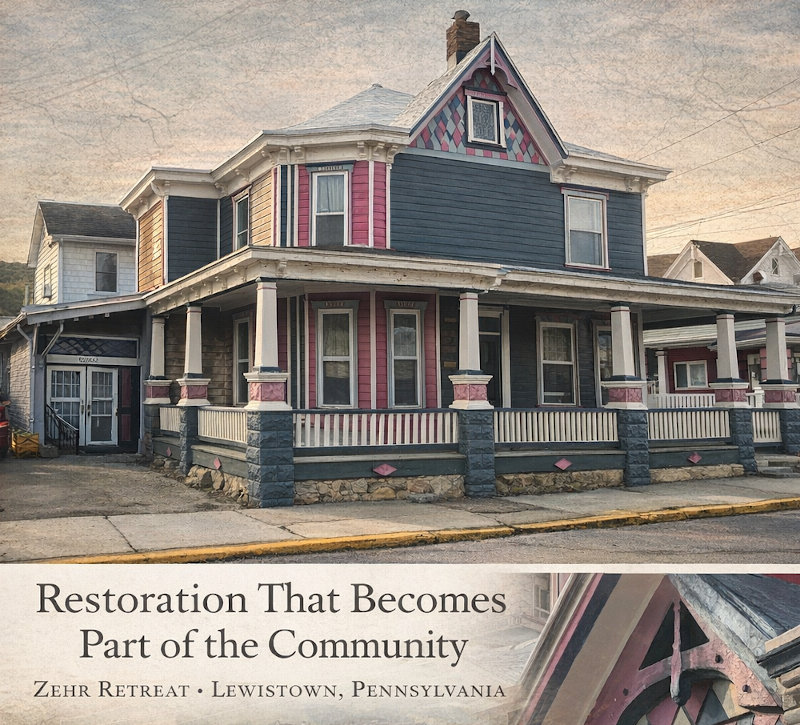
Located on a corner along a one-way street, Zehr Retreat has become a place that naturally draws attention. With a three-way stop nearby and a steady flow of foot traffic, people have time to slow down, look, and take it in.
The wraparound porch extends toward the sidewalk, creating a connection between the home and the street. From a distance of several blocks, the structure stands out—not just because of its size, but because of the color, detail, and care put into its restoration.
It is common to hear compliments from people passing by. Some comment on the colors, others on the design, and many simply express appreciation for the effort. These everyday interactions reflect something larger: the home has become part of the shared experience of the neighborhood.
More Than Curb Appeal
Restoration at this level goes beyond basic maintenance or improvement. It is about bringing back character, highlighting architectural detail, and honoring the original design while allowing it to live comfortably in the present.
Victorian homes, in particular, lend themselves to this kind of expression. Their structure invites color, contrast, and craftsmanship. When restored thoughtfully, they do not just blend in—they contribute.
The Ripple Effect
One restored home can influence an entire street. It can:
- Encourage others to invest in their own properties
- Increase appreciation for local architecture
- Create a sense of pride within the neighborhood
- Offer a visual landmark that people recognize and remember
These effects are often subtle, but they are real. Over time, they contribute to a stronger and more connected community environment.
A Daily Interaction with the Community
Unlike homes set back from the road or hidden from view, a home close to the sidewalk becomes part of daily life. People walking by, driving slowly through the stop, or pausing at the corner all experience the space in a direct way.
The wraparound porch plays a key role in this interaction. It softens the boundary between private and public space, creating a welcoming presence that feels open without giving up privacy.
In this way, the home becomes more than a residence. It becomes a point of connection.
Preserving Character in a Changing World
As new construction and modern materials continue to shape many communities, historic homes offer something different. They reflect a time when design, materials, and craftsmanship were closely tied to place and tradition.
Preserving and restoring these homes helps maintain that connection. It keeps a piece of history visible and relevant, allowing it to be experienced rather than simply remembered.
A Living Example
Zehr Retreat is still an ongoing project, but its impact is already visible. The positive feedback from the community, the attention it draws, and the way it stands within the streetscape all point to something meaningful: restoration has value beyond the property line.
It is a reminder that thoughtful work, attention to detail, and a willingness to bring something back to life can make a difference—not just for the owner, but for everyone who passes by.

Living Art Victorian Revitalization in Lewistown PA
Brad Zehr | ZehrRetreat.com | brad@zehr.net