Architecture of Zehr Retreat
Design Elements Give Feeling
Zehr Retreat is more than a restored home—it is a study in traditional craftsmanship, regional building practices, and thoughtful design that has stood the test of time. From its structural layout to its decorative details, the home reflects both functionality and character in equal measure.
Three-Bay Structure and Vertical Presence
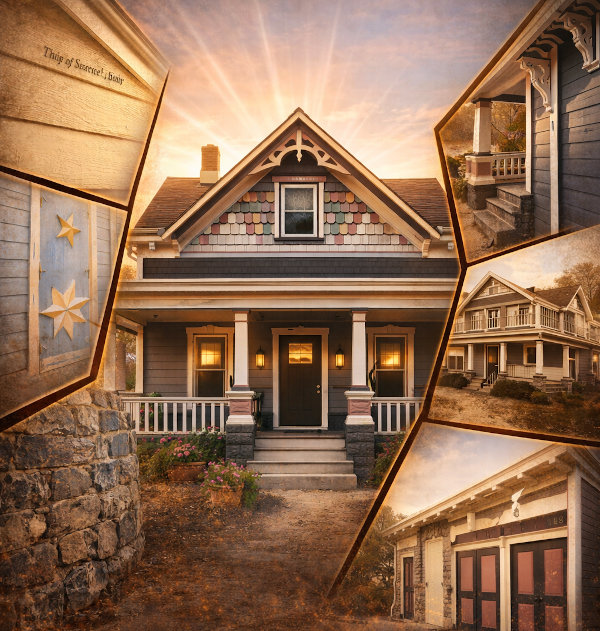
The home is defined by its three-bay configuration, a classic architectural approach that creates both balance and visual interest. Two of the bays rise to full two-story height, giving the structure a strong vertical presence, while the third provides variation and depth to the overall form.
What makes this design especially notable is that all three bays originate from the full basement level, creating a continuous structural foundation from the ground up. This unified approach contributes to the home's strength and longevity.
Stone Foundation and Full Basement
Beneath the home lies a full basement with a 9-foot ceiling—an impressive feature for a house of its era. The foundation is constructed of solid stone walls, a method commonly used in the late 19th and early 20th centuries for durability and load-bearing capacity.
This type of foundation not only supports the structure above but also reflects a time when homes were built with long-term use and resilience in mind.
Yellow Pine Dutch Lap Siding
The exterior of Zehr Retreat is clad in yellow pine Dutch lap siding, a material and profile that combines durability with visual texture. The Dutch lap design creates subtle shadow lines across the facade, adding depth and character as light changes throughout the day.
Yellow pine, known for its strength and workability, was a practical and popular choice in traditional construction. Its use here speaks to both availability and craftsmanship, as well as the intention to create a lasting exterior.
Rooflines, Gables, and Decorative Detail
One of the most striking features of the home is its roofline. The gables showcase decorative shingle work and trim details that highlight the artistry of the original builders. These elements were not purely functional—they were designed to express individuality and pride in construction.
The patterned shingles and trim accents create a layered visual effect, drawing the eye upward and giving the home a distinctive architectural identity.
Porch and Human-Scale Design
The wraparound porch anchors the home at ground level, providing both function and welcome. With its columns, railings, and detailed basework, the porch creates a transition between the public street and the private interior.
This element reflects a time when homes were designed not just for shelter, but for connection—offering a place to sit, observe, and engage with the surrounding community.
Attached Garage and Practical Evolution
As needs changed over time, the home adapted. The attached garage and off-street driveway represent practical additions that integrate modern convenience while maintaining the integrity of the original structure.
These elements tell part of the home's story—one of continued use, adaptation, and care across generations.
A Home Built to Last
Taken together, the design elements of Zehr Retreat reflect a philosophy of building that values strength, detail, and longevity. From the stone foundation to the decorative gables, every component contributes to a structure that is both functional and beautiful.
Today, the home stands not only as a place of residence, but as a reminder of the craftsmanship and thoughtful design that defined an earlier era of construction.
Dutch lap siding was designed to shed water efficiently while also creating a distinctive shadow line—both functional and decorative.

Living Art Victorian Revitalization in Lewistown PA
Brad Zehr | ZehrRetreat.com | brad@zehr.net